caraer
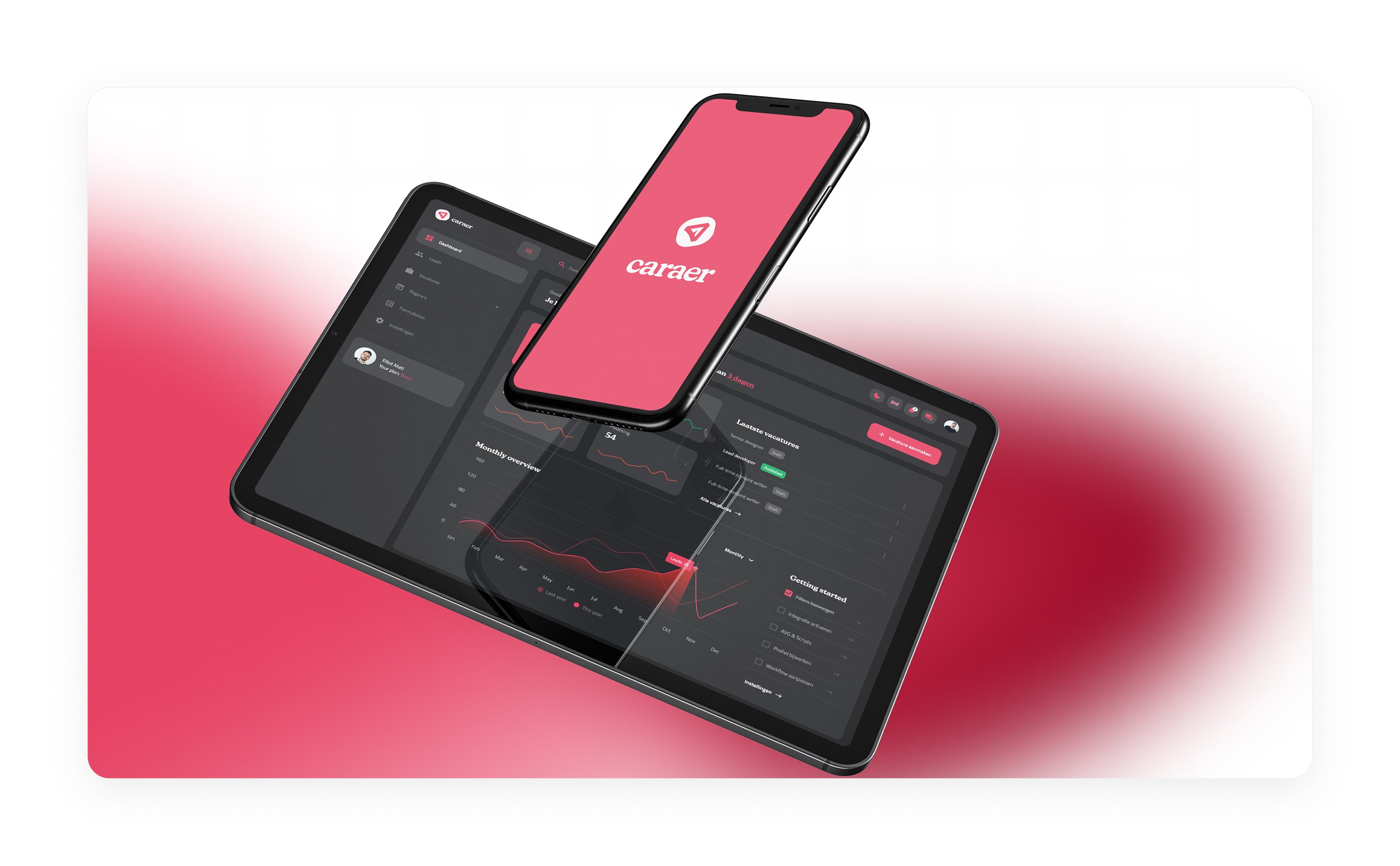
A complete brand redesign that transformed Paige into what is now Caraer. I created the new logo, visual identity, and brand guidelines while helping reposition the product toward a clearer audience of recruitment managers, recruitment business owners, and the wider people shaping modern hiring.

Client
Caraer
Year
2025
Project type
Brand Identity, Repositioning & Brand Guidelines
Credits
Jan Hein de Wilde
Brand Identity
Repositioning
Guidelines
Recruitment
Problem
Paige needed to become something clearer, more mature, and more relevant to the people it wanted to serve. The existing identity did not create a strong enough foundation for the product’s next stage, and the audience was still too broad.
Role & Scope
I led the brand redesign from the new logo through the visual identity, brand guidelines, audience repositioning, and product direction. The work combined identity design with strategic thinking: understanding who the product should speak to, what those people needed to believe, and how the new Caraer could feel credible, useful, and distinctive.
Outcome
Paige became Caraer: a clearer, more confident brand with a new logo, a more defined visual language, and a stronger audience focus.
Timeline
Audience discovery, brand strategy, identity design, logo redesign, guideline creation, repositioning, and product alignment.

Context & Constraints
The challenge was to create a new identity without treating branding as a surface exercise. The brand needed to clarify the product, the audience, and the direction the company wanted to grow into.
◉
Paige needed a new name and identity that could support a more focused and credible product direction.
◉
The audience was difficult to define because the product touched multiple people across recruitment businesses and hiring teams.
◉
The identity needed to work for recruitment managers, business owners, and the wider people involved in hiring decisions.
◉
The new brand had to create a consistent foundation for the product, website, sales conversations, and future communication.


Process
01
Discovery & Problem
We started by understanding why Paige no longer represented the ambition of the product. The challenge was not only visual. The brand needed to become more specific about who it was helping and why those people should care.
02
Audience & Positioning
I worked through the audience problem by looking at the recruitment ecosystem: recruitment managers, recruitment business owners, and the teams who influence hiring operations.
03
Identity & Logo Creation
I created the new Caraer logo and rebuilt the identity around a more confident and ownable direction.
04
Guidelines & Product Endorsement
The identity was turned into a usable guideline system covering the logo, visual language, application principles, and product expression.
05
Refinement & Alignment
The work was refined through conversations about audience fit, product clarity, and how the new brand should behave across different touchpoints.
Design Decision
Evolve Paige vs Become Caraer
The identity needed to decide whether Paige should receive a light visual refresh or become a more clearly defined brand with a new name, logo, and strategic direction.
Option A
Refresh Paige while keeping the existing identity
Option B
Create a new identity and reposition the product
Chose: Build what is now Caraer
We chose to move beyond a refresh and create Caraer as a clearer next chapter. The new logo and identity gave the product the confidence to speak to a more focused audience and grow beyond the limitations of Paige.


Learnings
◉
The hardest audience to find is often not a demographic; it is the person who feels the problem most clearly and has the power to change it.
◉
A new logo has more impact when it marks a real change in positioning. Caraer became stronger because the identity, audience, and product direction moved together.
◉
Brand guidelines should help teams make decisions, not only protect visual consistency.
What I'd do differently
◉
I would define a clearer long-term brand measurement framework, including recognition, audience fit, product understanding, and confidence in the new direction.

Next project
